►
http://www.facebook.com/HavanaSwing◄
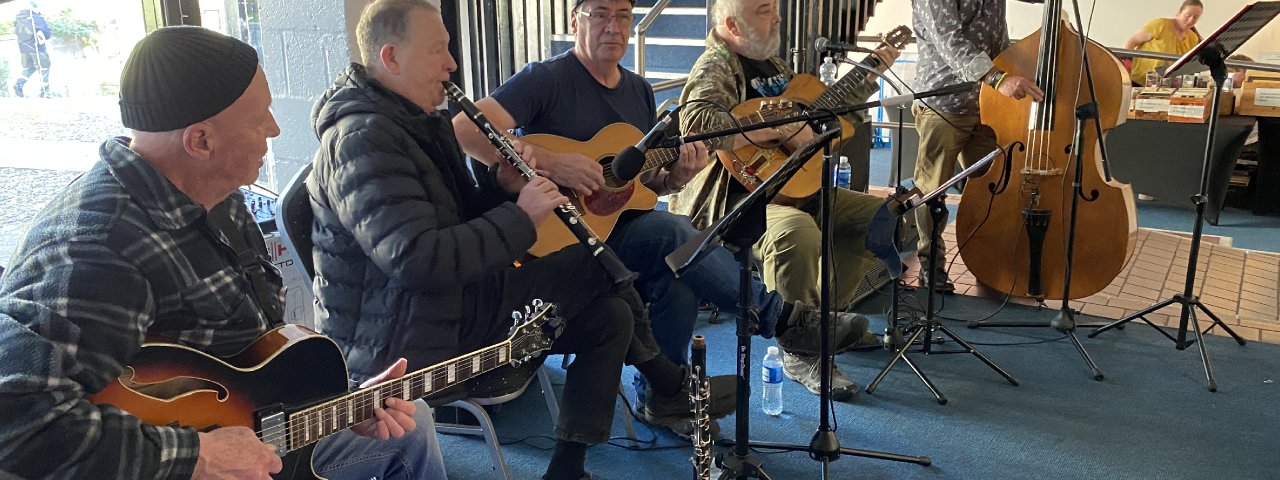
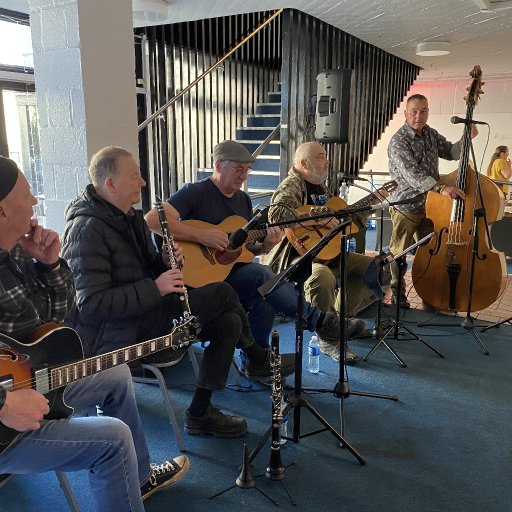
Havana Swing play Sweet Sue by Victor Young at the Pitlochry Festival Theatre - captions available for those who wish to learn the lyrics!
http://www.havanaswing.com
In all likelihood the West Coast-based band of Earl Burtnett may have introduced this number, as his version hit the charts in June, 1928. The tune enjoyed popularity in several later versions as well:
Earl Burtnett and His Los Angeles Hotel Biltmore Orchestra (1928, Biltmore Trio, vocal,
#3)
Ben Pollack and His Californians (1928,
#3)
Mills Brothers (1932, vocal,
#8)
Tommy Dorsey and His Orchestra (1939,
#13)
Johnny Long and His Orchestra (1949,
#19)
Since Sweet Sue wasnt introduced in a Broadway show or a film, its a little difficult to ascertain who actually premiered the tune. A recording by a Chicago band led by pianist Charlie Straight may have been the first, since composer Victor Young was a member of Ted Fio Ritos Orchestra in Chicago when the song was published in 1928 and was also doing freelance arranging for a number of Chicago bands. Young had also been a member of drummer Ben Pollacks band, which recorded the tune in April, 1928, probably using an arrangement by Young.
Sweet Sue was likely the biggest hit of lyricist Will J. Harris who began in the early 1900s writing mainly cowboy and Hawaiian numbers popular at the time.
The original sheet music of Sweet Sue has silent film star Sue Carol (1906-1982) pictured on the cover. Some sources state that the song was written for her, which is possible, but more likely it was simply a way of plugging her film career which began in 1927 and ended ten years later. (She appeared in Check and Double Check with Duke Ellington.) Nevertheless, she was born in Chicago, so there may be a connection to Victor Young and Will J. Harris, both of whom worked in the Windy City. Sue Carol married actor Alan Ladd in 1942 and became his manager.
Sweet Sue contains a repeated rhythmic figure, two quarter notes followed by a half-note, played on the same tone. This figure occurs with great frequency in early jazz music, especially with Louis Armstrong. It is a strong feature on his 1926 recording of Struttin with Some Barbeque, written by his then wife Lil Hardin-Armstrong. It doesnt require a great stretch of the imagination to believe that Victor Young heard Armstrong during his time in Chicago in the mid-to-late 1920s.
Early versions of this tune lean towards the sentimental, syrupy side. On Paul Whitemans 1928 recording, the great cornetist Bix Beiderbecke rises from a turgid pseudo-symphonic treatment to play a magical chorus into a derby hat (unusual for him, as he generally played without mutes).
By 1937 the tune had become a swinging jam vehicle. Illustrating this perfectly is a session from Paris featuring visiting firemen Bill Coleman (trumpet) and Dicky Wells (trombone) (on tour with Teddy Hills Orchestra) with Belgian guitarist Django Reinhardt. The results are beautiful, swinging jazz.
One of the great small group recordings prior to World War II brought together New Orleans clarinetist and soprano saxophone giant Sidney Bechet with Chicago cornetist Muggsy Spanier. Ably supported by Tommy Dorsey guitarist Carmen Maestren and New Orleans bassist (ex-Duke Ellington) Wellman Braud, the results were pure magic.